
Why Insurers Buy Reinsurance
Reinsurance is more than a backstop for extreme losses: it's structural to how insurers stabilize earnings, access expertise, and free up capital for growth.

Reinsurance is more than a backstop for extreme losses: it's structural to how insurers stabilize earnings, access expertise, and free up capital for growth.
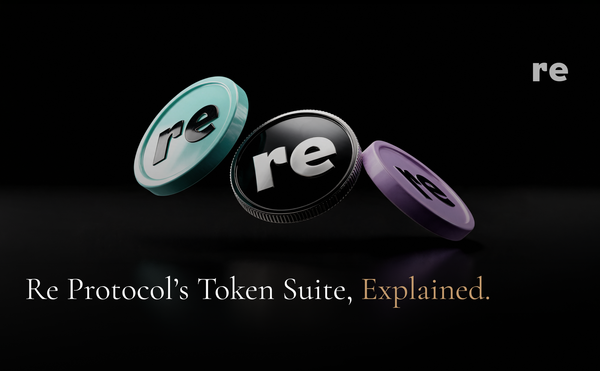
A breakdown of Re Protocol's three-token system. reUSD and reUSDe are yield-bearing deposit tokens that fund reinsurance collateral, while $RE is the governance instrument that lets holders shape the protocol itself.

Re became the first Web3 protocol to submit independently-audited financial statements as part of an exchange listing, proving to exchanges and tokenholders alike that the business behind $RE is solvent, revenue-generating, and real.
A step-by-step guide to the first reUSDe redemption window (July 9–22), covering how to submit a request, track pro-rata fulfillment, and claim your sUSDe payout in the Re App.
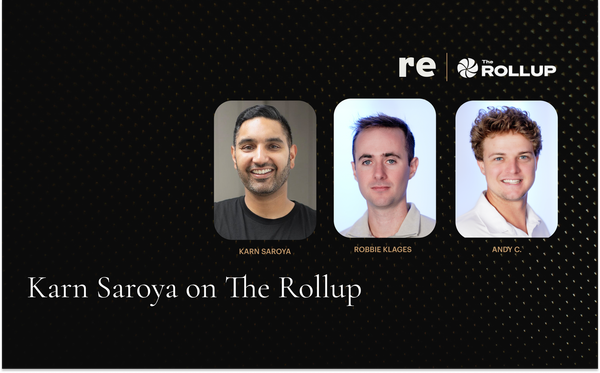
On The Rollup, Re CEO Karn Saroya breaks down why the business is refocusing on growth after its TGE, what the $RE token is designed to do, and how Re's first-loss structure sets it apart from other reinsurers.

In June, Re's underwriting portfolio grew to $510.5 million, the $RE governance token launched publicly across 27 venues, and total value locked approached the $600 million threshold.

Redemptions are gated by actuarial release as the underlying insurance programs mature and loss development clarifies. The first reUSDe redemption window opens July 9 and stays open through July 22.
Re Protocol, the onchain reinsurance marketplace already carrying close to $600 million in TVL, opened governance to public participation on June 18, 2026, distributing the $RE governance token across a coordinated set of global venues.
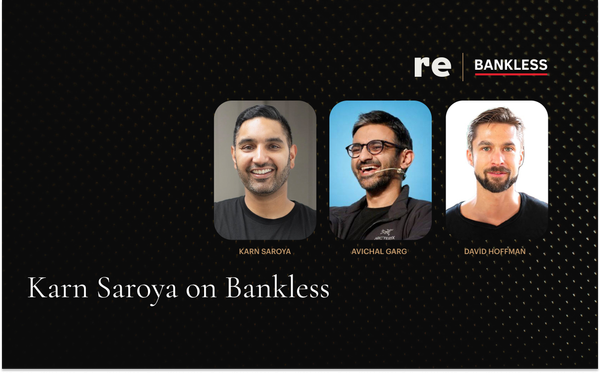
Re CEO Karn Saroya joined the Bankless podcast to explain how Re is building an onchain reinsurer modeled on Lloyd's of London, bringing transparent, stablecoin-backed capital to a $700B market.

Re has written $510.5M bound premiums, providing coverage for more than 700,000 U.S. policyholders and the homes, cars, and small businesses they depend on.

Re's verifiable solvency architecture combines Fireblocks custody, Chainlink Proof of Reserve reporting, independent smart contract audits, and layered operational controls — so capital protection is a verifiable condition, not a claim.
Today, the Resilience Foundation is proud to announce the public launch of $RE, the ERC-20 governance token for the Re Protocol.